Gearing up for future action in Seattle, I am now working through the following titles:
Kemp, L. (2025). Goliath’s Curse. Random House.
Fullerton, J. (2025). Regenerative Economics. New Society Publishers.
Atkins, P. W. B., Wilson, D. S., Hayes, S. C., & Ryan, R. M. (2019). Prosocial : using evolutionary science to build productive, equitable, and collaborative groups. Context Press.
That short list is not a bad jumping off point for anyone wishing to have a comprehensive view of current social science, aimed at prosocial action and future-oriented transformations. Kemp adds a healthy dose of historical realism about how power structures came to be the way they are. Fullerton outlines new economic approaches, informed by, but not bound to, classical and neoclassical economics. Atkins et al. show how to undertake social action from micro to larger scales.
In addition to the print works, I’m also devouring YouTube videos on AI, featuring leading lights at Microsoft, AWS, and Google, as well as commentators both pro and contra AI, and power users much in the weeds on all the latest models. Why? Because (nod to Kemp here), whether one plays for team David or team Goliath, the battles for the future of society will transpire largely over digital networks. Likewise (nod to Fullerton), AI is currently the leading driver of the continuation and intensification of the ancient extractive economy. No regenerative economic program can afford to ignore it. Finally - and this is the nub of whatever my “Seattle praxis” may turn out to be - I’m finding that “pro-social” is a good way to organize ground level action on any number of topics, and moreover, there is no reason in the world AI and cloud infrastructure can’t be bent to the purpose of supporting
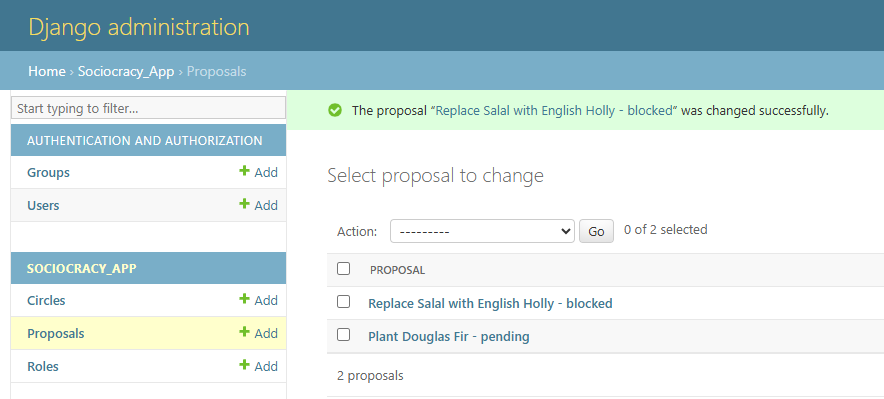
ground-level, small group, social action. The attached screen is from a prototype app I vibe coded live on Zoom during a small-group class session last week. That’s pretty much the Seattle stack in a nutshell!