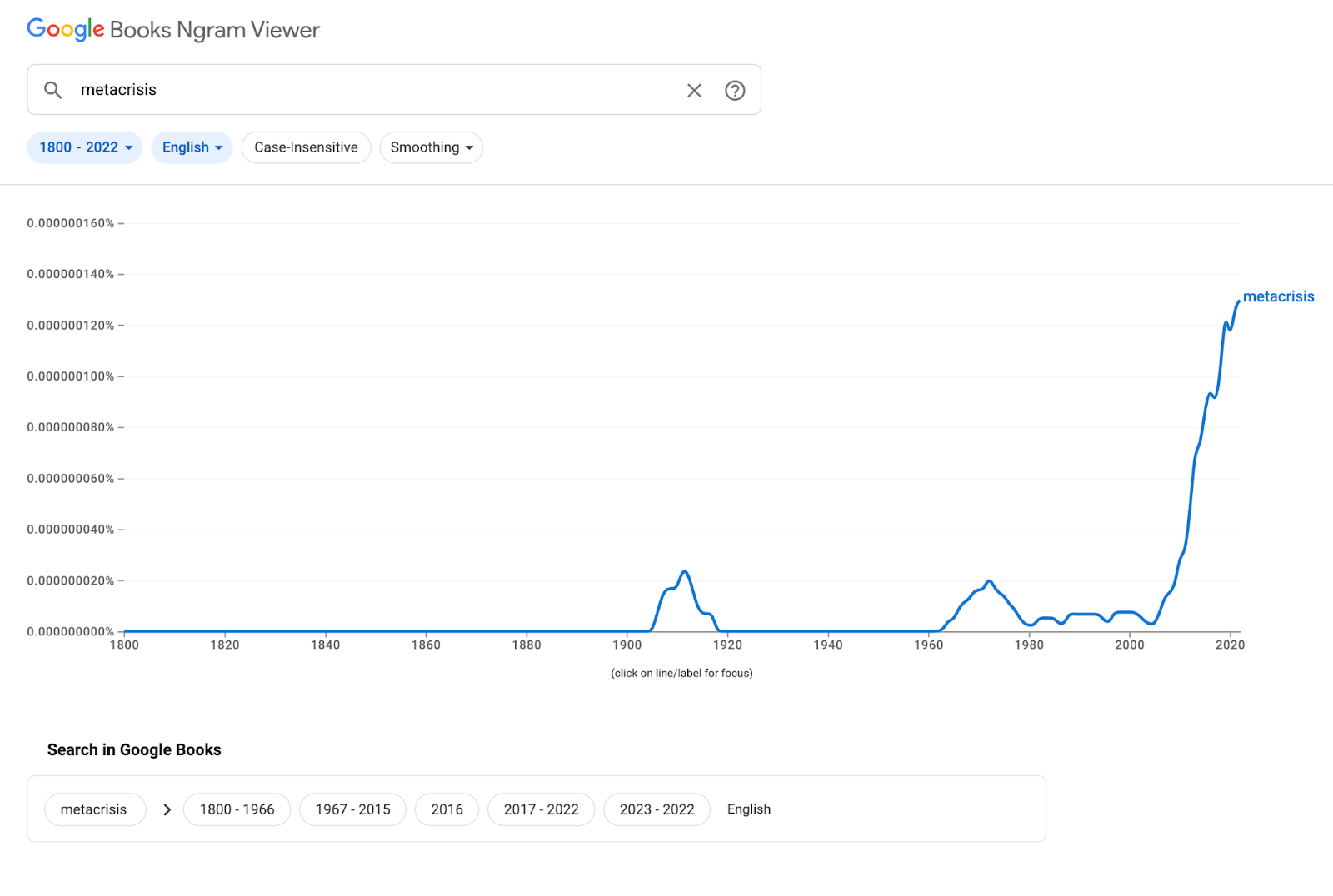
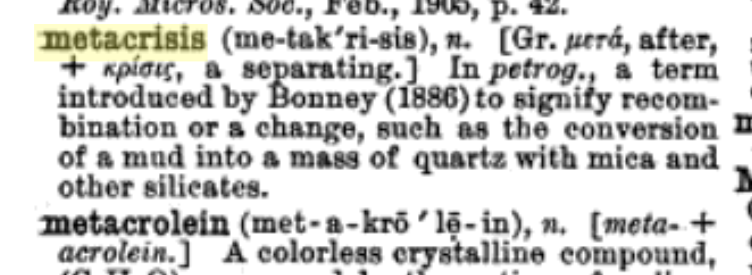
Here are some initial research notes on the genealogy of the term metacrisis primarily using the google ngrams tool.
Context
As part of the work on the Polycrisis to Metacrisis paper I did work earlier in the year on looking up the genealogy of the term metacrisis*.* The work here is ongoing and I thought I’d post some of the notes I have so far to “get them out there”
There I highlight this paper: ‘Innovation, Sustainability and ICT’ by economists David J. Lane and Dimitri van der Leeuw as being the first time the term is used in a way that is similar to more recent ‘liminal web’ approaches.
Very curious if a similar case could be made for some of the much earlier examples you’ve found.
I just picked up your substack article, and consequently subscribed to your substack.
In it, you write, “The focus on technological innovation policy as a root cause of global crises anticipates Schmachtenberger’s concern that perverse incentives around innovation - particularly in the field of AI - are among the generator functions of existential risk.
Schmachtenberger points out that in a competitive market economy, AI companies have financial incentives to seek first-mover advantage at the expense of good governance around safety and social impact.”
As it happens, I published a couple of pieces that might add something to the conversation, if they are not “a day late and a dollar short”
I don’t want to deflect conversation away from the genealogy of the term, but I’d somehow like to contribute to the stream of thought in which your article is swimming.
I’m curious as to how these articles land amongst the learned folk on this platform.