From the New York Review of Books: How New York’s Tenants Won | Tara Raghuveer | The New York Review of Books
(Unpaywalled: https://archive.ph/DWPbc)
Beautiful, inspiring story …
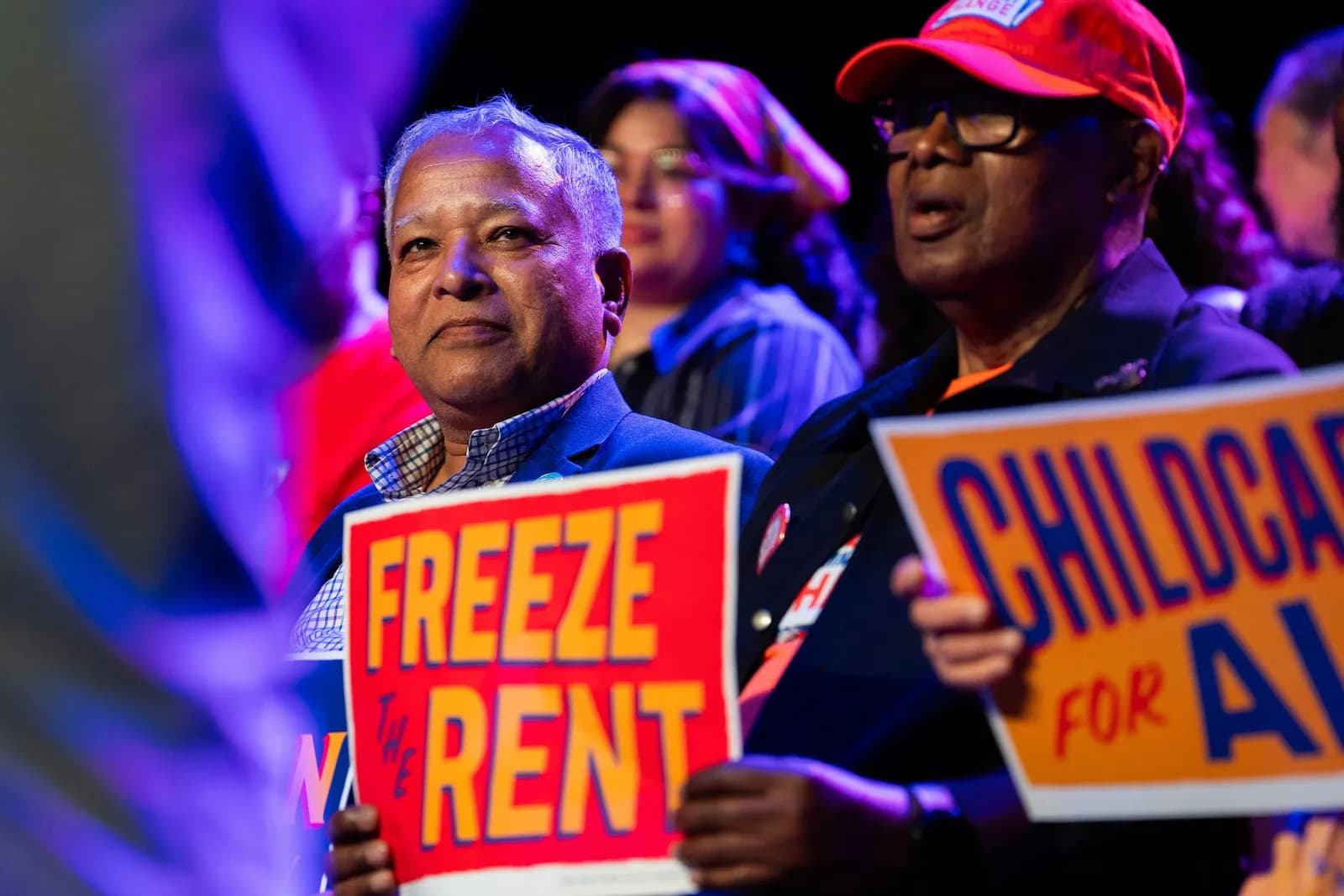
On June 24, 2025, Mamdani defeated former governor Andrew Cuomo and nine other candidates to become the Democratic nominee. [and given democratic nature of NYC this means he’ll be mayor]
In October 2024, Mamdani announced his candidacy for mayor of New York City in the 2025 election. His campaign platform includes support for fare-free city buses; public child care; city-owned grocery stores; a rent freeze on rent-stabilized units; additional affordable housing units; comprehensive public safety reform; and a $30 minimum wage by 2030. Mamdani also supports tax increases on corporations and those earning above $1 million annually. [
]
Excerpts
The night before the New York City municipal primary, the air was sticky with heat and Ferdousi Begum was too tense to sleep. For the past six months, Begum—a sixty-nine-year-old Bengali immigrant living in a rent-stabilized twenty-unit apartment building in Astoria—had been canvasing in support of Zohran Mamdani’s mayoral campaign with her seventy-one-year-old husband, Parveg Hasan. They had been visiting small businesses, mosques, subway stations, and schools in their neighborhood. “Whenever we found another Bengali, we would engage in conversation,” Hasan told me. “We would start with Salaam. What is your name? Are you a tenant?”
Begum and Hasan have lived in Astoria for seven years. He works late nights selling food from halal carts, mostly in midtown Manhattan; she runs the household they share with their forty-year-old son. They got involved in tenant organizing four years ago, after Begum came across a meeting of the Astoria Tenants Union in a nearby park. She soon joined the group that had convened the meeting, the Committee Against Anti-Asian Violence (CAAAV), founded in 1986 to bring together working-class Asian immigrant communities in Manhattan and western Queens to organize for racial and economic justice.
Some time later she invited Hasan to join. At first he was skeptical, concerned about the work’s potential repercussions, but after several months he “saw it was worth the risk.” Since then the two have been active in the tenant union together, bringing in neighbors one by one. “I tell everyone about organizing. I speak to my friends, family, neighbors about the importance of growing our power,” Begum told me via an interpreter. “Many people come because of me.”
The couple spent months focused on helping Mamdani win. “For us it’s about being able to live in this city,” Begum explained. “The reality is we stay in this city even though we struggle to live here. There’s easy transportation, Bengali groceries. It’s possible to find work…but it’s not possible to make ends meet. Rent is the number one killer. The whole community is suffering.”
On election day Begum got out of bed at 5 AM. By 7 she and Hasan had arrived at the offices of CAAAV Voice, the group’s political sibling organization and a member of the New York State Tenant Bloc, a coalition working to channel tenants’ political power. The members divvied up doors to knock, phone numbers to call, and polling stations to observe. Begum and Hasan got out on the doors themselves, knocked until it got too hot, went home to shower, and returned to the office to phonebank. At 6 PM they joined their neighbors for a last push: three hours of outreach in the park and on the streets, running people to the polls if they hadn’t voted. Hasan got someone there with two minutes to spare.