Excuse me again … you used the word “paranormal” yourself like 2 responses ago. What was that all about?
Sorry, I didn’t mean to accuse you of anything. I still need to use that word at the moment, because if I use my own vocabulary then nobody will know what I am talking about. So it isn’t inconsistent – I’m saying we need to update the vocabulary, but I still have to use the old vocabulary.
Here’s one way to look at the big picture:
- “It” = materialism
- “It from Bit” = energy emergence story
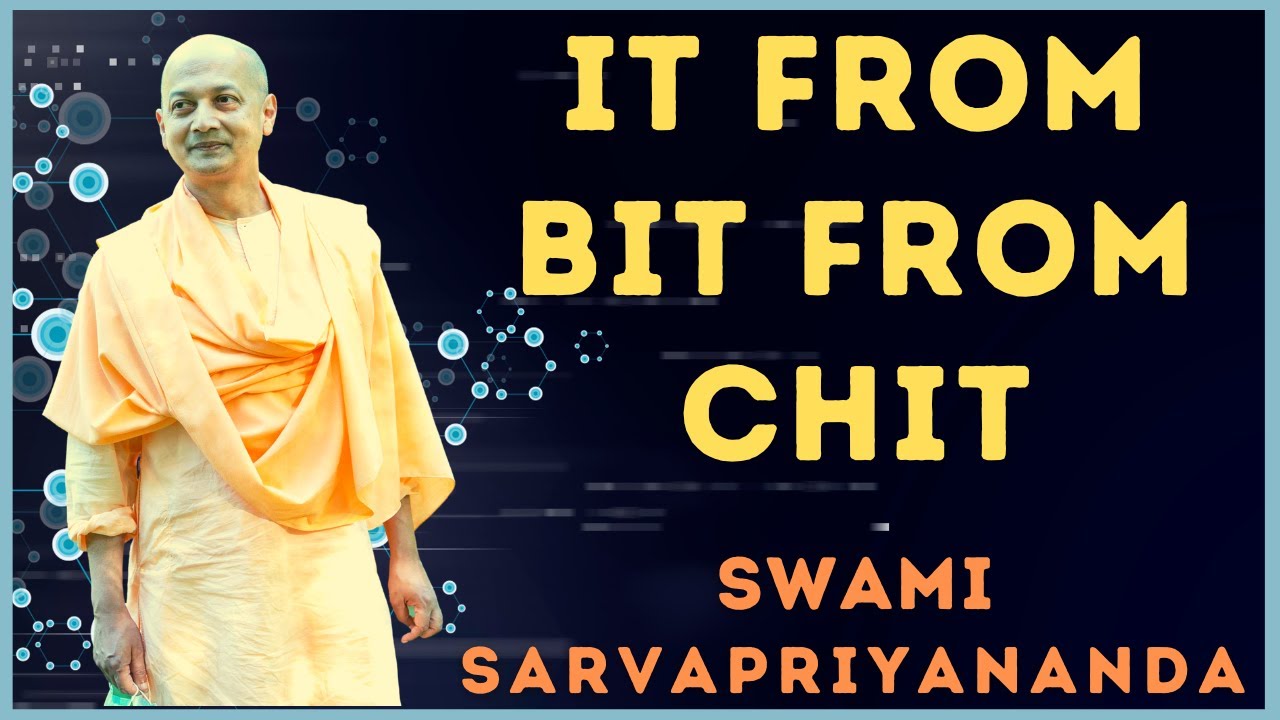
- "It from Bit from Chit’’ = consciousness first, emanating though and into the material
I prefer 3), but I get along with 1) and 2) as far as they go.
None of the above. None of those capture the big picture for me.
1 leaves out mind.
2 requires an inexplicable emergence of mind.
3 claims mind can exist without brains.
False, false and false.
I believe simplest way to describe it is:
0 = 1 + -1
Or the Yin/Yang diagram.
re: " Consciousness as subjective conscious experience
Consciousness in the form of subjective conscious experience begins to take shape in the context of neurocognitive activity in animals with brains and complex active bodies. UTOK posits that “flashes” of valence qualia emerge as sensory elements are yoked to energized motions and start to give rise to a unified perceptual experience. In other words, the interplay between external sensory input, internal perception, and the motivated action output forms the essence of the animal-environment feedback loop. These elements are bounded together to create a broadcast function to coordinate the animal’s attention and action. This then turns into a stage of working memory and ultimate forms an “inner mind’s eye” in creatures like crows and dogs.
This is incoherent materialism. UTOK is materialism, and therefore wrong. The above description is written by somebody who does not understand the Hard Problem. Specifically the term “give rise to” is necessarily meaningless.
UTOK does not deserve a place in 2R, for this reason.
It helps us see clearly the broad and general definition of functional awareness and responsivity, and then homes in on the primary meaning as subjective conscious experience that likely started as flashes of sentience in early animals,
Do lots of people around here believe this rubbish?
I am genuinely surprised. I was not expecting to find materialists here. I think I need to start a thread on UTOK and materialism.
You might want to attend this and explain to them how wrong they all are.
1 Like
What is your own view on the Hard Problem? Please describe it, and explain whether you think it can be solved.
I like what this teacher says.
But my focus is on history, social sciences, and the professions. I’ll let the theologians and philosophers debate consciousness on my behalf. I’m happy to work with people who hold differing views on the matter.
@GeoffDann Hi Geoff, late to this thread, so don’t know if you received an answer that satisfies just yet.
Tl;dr post-modernism is a necessary cultural stage to question the uncritically, unquestioned meanings given us by modernity. It is what stimulates individual inquiry beyond those certainties (metamodernism). Yet, most people won’t abandon their meanings or beliefs; some will only accept when a new system of meaning emerges. That new system will be the emergent outcome of metamodern inquiry, i.e. metamodernity is leading towards it. There is something yet to emerge that will allow you to step seemlessly into this new system without the discomforting stage of uncertainty or have to undertake this individual inquiry yourself.
In detail:
Post-modernism provides a critique of the certainties of modernism, but it doesn’t provide answers. It provides reasons to doubt, without offering a way forward.
For some, this is sufficient to give them cause to let go the certainties that modernity dictates to us, and begin our own inquiry.
For post-modernists, they assert these critiques with the same certainties as modernists, i.e. the truth of their self-righteous perspective. This merely provokes a backlash from the modern perspectives. We have seen this play out culturally.
The effect of this cultural emergence of post-modern critique into culture is the erosion of definitive meaning; i.e. some concepts have so many meanings (different interpretations) that they effectively become meaningless words. Communication breaks down. For example, the left and right have different meanings of capitalism. ‘Racism’ either means discrimination of racial minorities (post-modern), or hatred based on race (modern) depending on perspective.
This break down of meaning is the post-modern condition. Namely, the post-modern critique of the certainties given by modernity has been demonstrated true, empirically, across modern culture.
Yet, this still does not give us any new meanings or certainties, nor convince the lay individual to embrace uncertainty; it just leads to a break down of communication across perspectives, and a plurality of different language systems with their own definitions; i.e. metamodernism. In summary, the lay person won’t abandon their values or meanings, just because we disagree culturally on what those meanings are.
Indeed, the same thing happened in the history of scientific progress. Conservatives wouldn’t accept the apparent dualities of particle and wave until there was a system that could explain how light could appear as both. In science, it took 17 years to accept and move into a new system of understanding all could accept and within which all could move forward.
2 Likes
Re: hard problem of consciousness is a problem of perspective. It is trying to describe consciousness from within the subjective experience of a self-conscious experience of consciousness; i.e. a subjective, partial, limited, perspectival experience of consciousness as a whole.
The hard problem goes away if consciousness is foundational to reality. Btw This doesn’t mean mind, which is an emergent, organised, complex form of consciousness, out of which comes an emergent self-consciousness; i.e. the perspective from which the questioning of consciousness and the hard problem emerges.
This inevitably means that materialism is incomplete.
2 Likes
Hi Josehan.
You are right, I’m not satisfied yet with the answers.
This makes perfect sense to me – and is indeed in the ballpark of the answer I was hoping for. You seem to be implying that the epistemology for a mature 2R will eliminate the discomforting liminal stage, but that currently it doesn’t exist. It consists only of disconnected parts which are yet to be assembled into a coherent whole. This sounds like it might allow for postmodernism to be consigned to the history books.
Do you personally have any sense of what this new thing will look like?
Would you agree that it is going to have to be epistemological in nature?
. Conservatives wouldn’t accept the apparent dualities of particle and wave until there was a system that could explain how light could appear as both. In science, it took 17 years to accept and move into a new system of understanding all could accept and within which all could move forward.
We’re nowhere near moving forward on this. It is 100 years since QM was invented, and I’d say that the scientific community in general is no closer to the right answer than it was in 1970. They still haven’t come to terms with Bell’s theorem, and I believe nobody at all has got the right interpretation. I believe the correct answer is a combination of MWI and von Neumann that almost nobody realises is possible (I have encountered one French physicist who told me they already understood it before I explained it to them, but he is the only one).
I believe I have the basic structure of what we are looking for. It takes the form of a new epistemological agreement (I call it the New Epistemic Deal). The purpose of that agreement is to bring together a large enough coalition of the right people to make this nascent paradigm shift a reality. It leaves most of the politics and religion radically open, but establishes some epistemological/metaphysical ground rules first. In effect it goes back to Hume and Kant and asks what conclusions they might have come to if they had been dealing with quantum theory instead of Newtonian physics.
Does that make any sense?
Yes, the hard problem is specific to materialism, and the conclusion we should draw is that materialism is wrong. It is either incoherent or it is bonkers (eliminativism).
None of the other ontological problems need to explain how consciousness can exist, because they don’t start out by implying that it doesn’t exist.
I think that once we accept materialism is wrong then it doesn’t matter all that much which of the alternatives we choose. I prefer to ask questions about causality and epistemology rather than arguing about whether objective idealism is the one true answer or whether it has to be neutral monism (for example). Materialism entails naturalism and the other positions don’t.
An acceptance that materialism is false is a good starting point to explore this. Are you aware of Thomas Nagel’s book “Mind and Cosmos”?
This is the perfect example to understand post-modernism as a stage of progress.
The essence of post-modernism was a critique of the conceptual structure and the certainties of modernity. Yet, it evolved into an outright rejection, and accepting the opposites as certain truths - i.e. no objective truth, no grand narratives, and then asserting its own alternative truths instead.
You’re demonstrating a critical recognition of the insufficiency of the dominant materialist paradigm. The natural tendency of the mind is to reject it as false, and often to consider that its opposite must be true. The metamodern condition recognises the insufficiency of both the established paradigm of modernity, and also sceptical of its opposition. This leaves us sceptical, yet without a direction or means to progress beyond this impass.
The new paradigm that ultimately emerges will have to reconcile materialism and idealism; i.e. both are partial true, reflecting important aspects of reality, yet both contain the same inherent mistaken assumption; perhaps. the unquestioned assumption of self-centric, intellectual perspective.
The emergence of the new paradigm should indeed, reconcile this apparent irreconcilable opposition, and therefore remove the barriers towards epidemic progress; i.e. an evolution in our understanding, and an evolving in our ways of understanding that lies beyond all certainties and oppositions.
I am not sure I would agree that is their common mistake – or even that there is any common mistake. I think they make different mistakes. If there is a common mistake it is that one thinks Yin can exist without Yang and the other thinks Yang can exist without Yin.
Maybe my problem is with the definition of postmodernism itself.
Yes.
You’re quite right.
[quote] Would you agree that it is going to have to be epistemological in nature?
[/quote]
Exactly,
- Firstly, it must present a more natural epistemology, in which reason, cognition, self-consciousness are emergent; i.e. modern epistemology is a product of the emergent intellect, but is self-centric, presumed objective, self-justifying and self-reinforcing, and such it limits progress beyond.
Think of the reason, the left brain rational cognition as missing a complementary cognitive component, discovery, the right brain imagination and revelation. Discovery is necessary to progress beyond structural limits of a moder understanding; here, discovery means concept, cognitive mode and also cognitive experience.
- Therefore, for the new paradigm to emerge it requires a methodology designed with this epistemology in mind. Namely, the new paradigm must speak to our historical experience rather than the demands of the intellect; it must create the conditions for discovery, such that it helps us transcend the limitations of modern understanding, and the demands of intellect.
[quote]
Do you personally have any sense of what this new thing will look like? [/quote]
This is something I’ve been working towards.
Some context:
- Firstly, I consider that knowledge is a limited form of experience and also a limited form of understanding. Furthermore, I suggest that the complexity of one’s understanding is proportional to the complexity of one’s experience and the duration of one’s persistent intention to understand it.
The key to my methodology is that we have all lived through an time of increasing and evolving complexity; online experience of different perspectives, interactions and feedback effects, a plurality of different epistemic perspectives and contrary knowledge claims, and experience of history as it has been unfolding.
It is this experience that the new paradigm must explain, such that it makes sense to us, and resolving the apparent inconsistencies between different perspectives and beliefs, and the result should get be emergent comprehension.
So, yes, the new paradigm will be epistemological.
For example, consider that understanding requires experience first, then intention to understand, persistence over time, and ultimately an emergent comprehension of experience. Culturally, those who lived through history already have all the complexity of experience that is needed, along with the recognition of the insufficiencies of all established knowledge perspectives. It follows that what is missing is the completion of this process of understanding that is necessary for an emergent comprehension. As described this is an individual, subjective, internal process that the individual must undertake, and it follows that some we experience it prior to others.
The challenge then is his to progress the understanding of the collective.
For the new paradigm to emerge, requires that this process of understanding be made objective, external in order to progress collective understanding. Indeed, all the inconsistencies in our collective understanding are already manifest in culture, forming binary oppositions around which we are divided. This objective process of understanding therefore requires an inversion of contemporary philosophical methodology; from experience towards coherent understanding.
First, it must show us what a new socioeconomic system could look like, then identify the barriers towards understanding and accepting it. It must then reason from this complexity of historical experience, discern overlapping patterns within, providing a tentative consciousness-based explanatory hypothesis for these different patterns. Then it must reason through successive orders of complexities of experiences to show that the hypothesis holds. It must ultimately explain and reconcile the apparent inconsistencies in our collective cultural understanding. The result should be an emergent comprehension of historical experience at the late stage of modernity, a recognition of the underlying process, closed systems and positive feedback effects that drive it.
First, this should remove the barrier towards accepting the vision of cultural progress presented at the outset, and also give us, via revelatory experience, an experience of the cognitive tools necessary to continue the subjective, internal, individual process to move past prior cognitive limitations and continue to evolve our own subjective understanding.
Only then can we leave our partial, mutually antagonistic perspectives behind and progress as a collective.
- So where does this understanding and methodology come from?
I come from a scientific background, vipassana meditation, group therapy, then experiential, epistemic and finally cognitive, self-reflective inquiry. Nothing more intelligent about me, just immersion in a breadth and depth of experience, embracing a radical uncertainty, and persistence in the intention to understand long after any sane person would have given up.
- So what will it look like; it must essentially turn modernity on its head.
Everything modern has self, or ego as it centre; epistemology, intellectualism, economics, hierarchies, individualism. All systems are essentially extensions of western ego; institutions, corporations, ‘the west,’ etc. Also the growth model again is associated with ego. Positive feedback effects again associated with the self-reinforcing ego, and unconscious drives and motivations; eg greed, lust, power, contempt, which are integrated into modernity as unquestioned, ‘natural’ features of the human condition, rather than base motivations that humanity must do inner work to overcome.
1 Like
I think we probably agree about far more than we disagree. Let’s hope things start to move. I am feeling positive. The world is changing – things are moving.
The essence of the dialectic process is the recognition that there is an unquestioned assumption that underlies both, seemingly opposite, irreconcilable beliefs.
Just at like zen koans, the essence is understanding how to reconcile the apparent paradox, by questioning the unrealised assumptions that create the apparent paradox that it presents. It is designed to inspire realisation of a middle way through the apparent contradiction.
Within science, it was particle and wave, the belief that reality must be consistent with how we experience it at the macro level, i.e. consistent with our experience-based understanding of reality. The beauty of science, and the scientific process, is that we can use experience/observations/evidence that is not consistent with our understanding can inspire collective self-critical reflection upon the unquestioned assumptions upon which our understanding is constructed. In science, it took a collective endeavour, individual genius, and successive stages through this history of classical science to achieve this.
The history of science has provided a beautiful example of how scientific inquiry can test understanding against experience and ultimately overcome the limitations of that same understanding.
If you want a reference, check our Anderson et al, “The cognitive structure of scientific revolutions”. They argue that normal science leads to progress without a change in conceptual structure, whereas revolutionary science leads to progress with a change of conceptual structure. Such progress is typically only accepted when it is supported by evidence that cannot be explained by the dominant beliefs. This leads to acceptance of its opposite belief, producing two irreconcilable facts. This create a cognitive crisis, and eventual breakthrough that questions the foundations and explain both opposite beliefs.
Within science this process has been demonstrated objectively through collective scientific endeavour, but this process also applies to experiential inquiry too. Although with experiential inquiry the individual is not objective, but starts from a subjective starting point within experience and a perspective established through developmental and individual experience; i.e. we are part of the experiments we are conducting, therefore humility and the use feedback is necessary to self-critically question our perspective and understanding when faced with new experience that is not consistent with our understanding/expectations. Then comes the self-reflective, self-critical stage. eventual insight then allows the individual to integrate the new within understanding. Ultimately the process of experience, self-reflection, recognition of unquestioned assumptions, and discovery of new ontological foundations is a means of making continual cognitive progress, continually undermining, deconstructing, and reconstructing understanding upon increasingly less structured foundations.
Essentially postmodern ‘deconstruction’ questioned the structure of knowledge, cognition and language; it tried to do this critical deconstruction objectively to the structure of modern knowledge itself , which modern thinkers obviously would not accept as it was inconsistent with their own structured understanding. The postmodern deconstructive endeavour was an outward projection of a process that must happen internally within the subjective understanding.
Which is why it didn’t work. Yes, this sounds about right.
Have you read Cynical Theories?
The more we talk about postmodernism - the more I like it. It’s a step towards more abstract thinking by trying to challenge what appear to be obvious truths by deconstructing the narrative and yielding new insights. As I’m still struggling to understand the ways of metamodernism - I think that postmodernism is very much relevant and what’s driving us into the new paradigm.