CHI-enabled Deliberately Developmental Society

Below’s the just-updated, 150-word-limited abstract of my paper to be submitted to the Towards a Philosophy of Artificial Intelligence conference, organized by the Hungarian Academy of Sciences, Budapest, 6-Oct-2026.

What is the wisest question that you can ask about any of the distinctions used and/or the abstract as a whole? (Asking your AI the same is OK.)

Towards a CHI-enabled, Deliberately Developmental Society
An axiological and sociocybernetic exploration of the future of AI

This paper explores how Collaborative Hybrid Intelligence (CHI)—the symbiotic relationship between humans and wisdom-fostering AI agents under human-AI co-facilitation—can catalyze the emergence of a Deliberately Developmental Society (DDS). The core hypothesis, that AI can function as a developmental catalyst of collective entities, is verified by our small-scale proofs of concept. Our unit of analysis is the participants-AI-facilitator triad, not the dyad of human and machine.

Drawing on a metamodern axiology that bridges modern aspiration and postmodern critique, we contend that CHI can be designed to scaffold collective self-knowledge and transformation. By integrating sociocybernetic loops, a DDS learns from failure, amplifies regenerative potential, and maintains commitment to core values. This work provides a normative framework for using hybrid intelligence as a vehicle for collective maturation, treating developmental potential as an emergent property of well-facilitated human-AI ensembles.

1 Like

I prefer to pronounce the acronym this way:

“Chi” (or qi) most commonly refers to the foundational life-force energy in traditional Chinese philosophy and medicine. It is a central concept in practices like acupuncture, Tai Chi, and feng shui

1 Like

Very briefly, it sounds like a good way to theorize what I’ve been approaching more as an experimentalist.

A couple quarters ago - at the height of the “AI will replace everyone” panic - I was tasked with guiding both students and professors through sorting how to approach AI. What I stumbled on is the key to the whole situation appears to be “teamwork” with AI agents needing to fit into the shape of what must inevitably be a human-led team. Focusing on AI capabilities exclusive of how AI alters organizational “chemistry” is a dead end. This quarter, many corporations that were all in on AI- motivated human layoffs last quarter are reversing directions back in the direction of human talent, because the hybrid intelligence model (CHI) clearly outperforms.

The pun was intended. :slightly_smiling_face:

1 Like

The academic literature treats AI-enhanced collective intelligence as a live field, but it’s oriented toward decision quality and team performance, not vertical development.

On the collective-intelligence-plus-AI side, the practice-oriented work (UNDP’s Accelerator Labs and the Collective Intelligence Project) is real and operating, but its lineage is participatory decision-making, action research, and democratic AI governance, which gesture towards being emancipatory in my radical sociology sense but not developmental in the Kegan sense. Nobody in that camp is measuring action-logic movement. That’s a gap that my research aims at bridging.

1 Like

Sounds interesting.

The integral/metamodern world takes Kegan for granted, but a few years ago all this broke out:

I’ve also had direct conversations with both Lene Rachel Andersen and Dave Snowden, neither of whom have much use for developmentalism. The way all that transpired for me is roughly as follows:

  1. a life-long educator, I always (naively) assumed education was accomplishing something.
  2. the post-George Floyd maximum “woke” moment problematized standard education to the point that I wanted to get back to some sort of rationale for why learning actually matters.
  3. I started digging around integral and metamodern to get back in touch with the developmentalism I recalled from figures like Piaget and Eric Erickson.
  4. That’s how I learned about Kegan in the first place.
  5. I had a ring-side seat as Lene rebranded her system from “metamodern” to “polymodern” specifically to dig a giant trench between her “bildung” and Wilberian developmentalism.
  6. Since then I’ve maintained a somewhat balanced diet between developmentalist thinking (led lately by Brendan Graham Dempsey) and more skeptical approaches.
  7. Before I began reading Nassim Taleb, I chose to brand my approach as “nonliner”. Taleb is just dripping with “nonlinear”, which is probably why I’m still reading Taleb! (Contrast that with the Wilberian “lines” of basically everything)

The AI literature is likely ignoring developmental potentials for AI because developmentalism, as such, fell so far out of favor during the heyday of academic postmodernism. Anyone who got an education degree in the past couple of decades would have been focused entirely on identity politics and very little on developmental psychology. My stance differs from that in key respects. I’m antique enough to recall the “modern” good old days when progress was progress and we all just assumed the world was headed somewhere generally good. I can’t quite shake that feeling - and hence a certain sympathy for developmentalism. On the other hand, somewhere on the journey to global progress for all, I did take note of quite a bit of conflict, contradictions, and general backsliding. Let’s just say where something like “Spiral Dynamics” is concerned, I see the spiral at least as much as the dynamics.

What I like about AI for education is the remediation potential. For example, currently I am reading Habermas on the history of western philosophy, not having bothered to have read much in the first place from western philosophy (including Habermas). What Habermas has to say about Thomas Aquinas or David Hume is quite interesting, but not easy to understand (and probably not so easy in the original German, either!). So I just use a lot of AI and Internet search as a personal tutors to help me get through the book. That seems generally effective. It suggests that diligent undergrads can accelerate their progress in any major by just looking up anything in the readings they do not understand. It only works, however, if one accepts that the endgame is digesting all that information in truly human ways. That’s where my “antique” view may prove difficult for the current generation to grasp.

1 Like

If the human ways of digesting all that information include metabolising its emancipatory potential, then the endgame may look quiet different.

I’d be curious how you define “emancipatory potential”. For me, it’s something like cognitive-emotional degrees of freedom.

1 Like

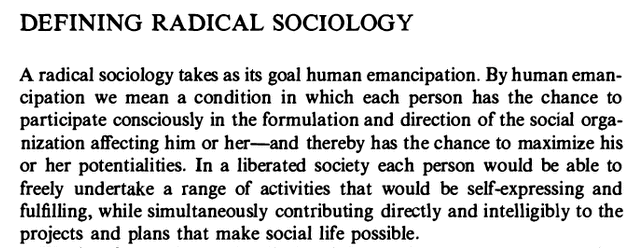
My still a work-in-progress approach to “emancipatory potential” is a combination of one coming from radical sociology (see below):

and from the perspective of critical realism, which is grounding the assertion of radical sociology:

There’s an old idea in radical thought: people are freer when they get to consciously shape the arrangements they live under, instead of having those arrangements run their lives from behind their backs. It’s a compelling idea—but its champions never quite explained why it’s true, or what exactly is doing the trapping. My approach borrows a piece of philosophy that fills both gaps at once. The key move is to treat the thing that holds people back not as a vague atmosphere or a bad attitude, but as a real structure with real force, something that actively installs limits inside us: habits of mind, ways of seeing ourselves, a sense of what’s possible that keeps us from stepping into that conscious, shaping role. If it’s real enough to produce those limits, then changing it isn’t just a nice preference; there’s a genuine reason to change it.

That reframes what our work with people is actually doing. The collaborative human–AI–facilitator setting isn’t just helping individuals grow for their own sake—it’s removing a specific block, the internal ceiling that the wider economic and political order installs and keeps reinstalling through the “ideology of the Hegemon” (Gramsci) . Growth and freedom turn out to be the same motion seen from two sides: clearing away what blocks a person is the same act as releasing what was in them all along. And this is the crucial guardrail—because the block is planted by the outside world, real change can’t stop at the individual. If someone shifts inwardly but the surrounding system just re-installs the ceiling, nothing has actually been freed. That’s the test the whole approach has to pass: inner change only counts if it holds up against the structures that put the limits there in the first place.

Clarification: What are the collective entities? Do you mean groups of people? Institutions? or something else?

Overall i’d ask:

In what way is AI acting as developmental catalyst (can you say more or give a concrete example)

What is the benefit of this developmental catalyst (what is a DDSociety? why is it important for something we care about)

1 Like

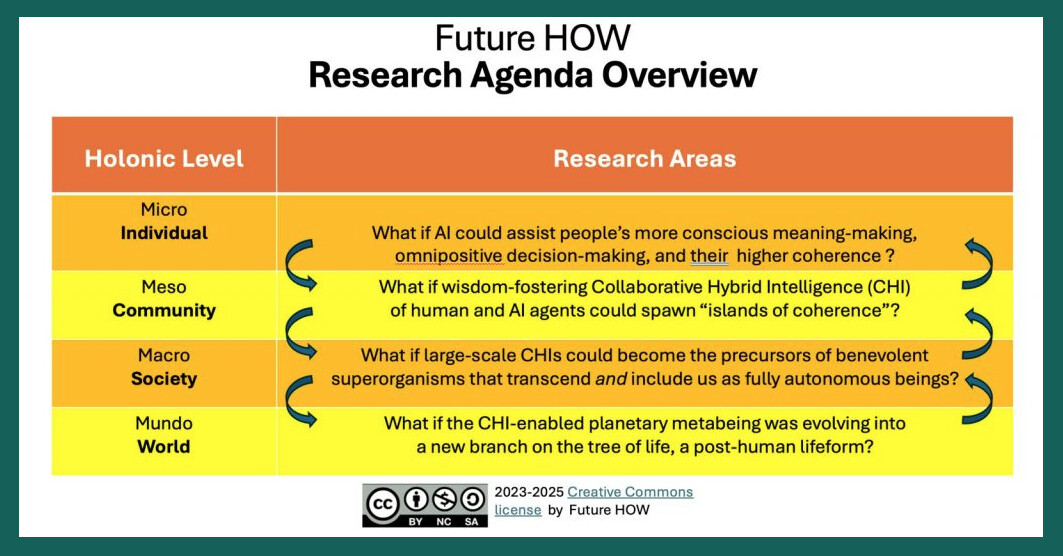
All of the above; human groups of any scale, including my meso, macro, and mundo nested holonic levels:

Your other two questions will be addressed in depth in the paper.

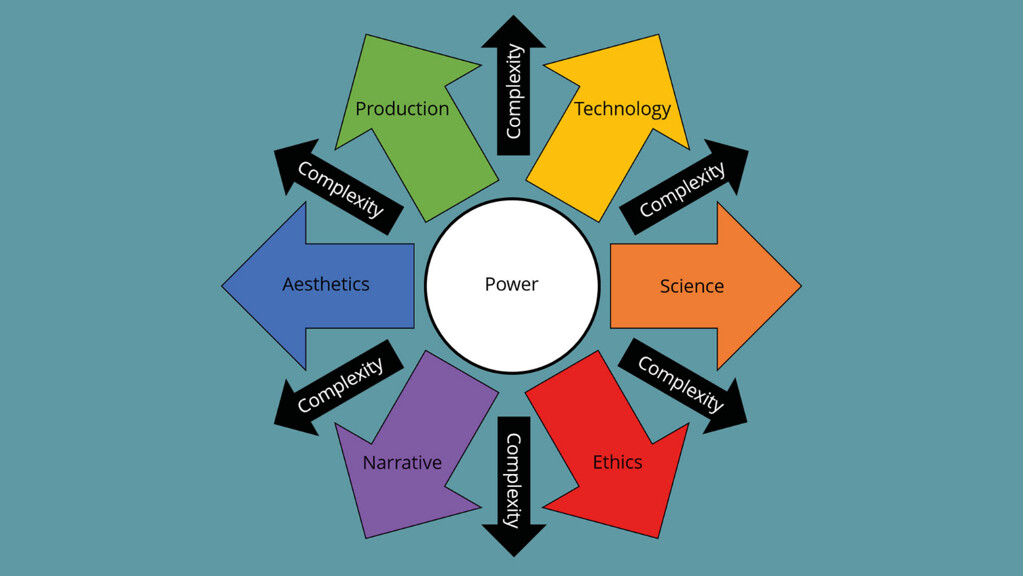
Here’s a diagram I borrowed from Lene Rachel Andersen.

Source: The Bildung Rose – Nordic Bildung

What she never theorized much though is the “power” circle in the center. Mostly, this is a plea for unguided, interdisciplinary, community-centered learning. Fine as far as it goes. I always thought the “power” circle needed something person-centric and developmental.

Before we forklift in Kegan to the center, however, (or even more elaborate “lines” of development), what I wish to acknowledge is that personal empowerment may not run in perfect disciplinary symmetry for all persons. I’m thinking a well-rounded, fully empowered community may have quite a few not so well-rounded specialists who none the less manage to collaborate with one another.

Hi George,

As you know from our previous discussions I think the ideas here are very interesting, but could use analytical refinement.

I would suggest that among the wisest questions you can ask about the abstract are those that combine analytical rigour with a focus on your lived context - which I take it in this case involves your desire to have the abstract accepted by the conference, and thereby spread valuable ideas and have a positive impact.

One way of collaborating with AI on this would be to ask it something like “how should I improve this abstract so that it is more likely to get accepted by this conference” - feeding it specific details about the conference, confirmed speakers etc.

I did this here with Claude Fable 5, but you may want to frame the question slightly differently to get different results:

Some things here that seemed useful to me included:

Rename or flag “CHI.” In academia CHI unambiguously means the ACM human-computer interaction conference. Reviewers will trip on it.

Cut the movement jargon harder. “Metamodern axiology,” “sociocybernetic loops,” “regenerative potential” — nothing in this speaker list suggests sympathy for that vocabulary. One defined term (DDS) is plenty for 150 words.

To focus solely on improving the ideas themselves, I also asked Fable just to make it more academically rigorous, here’s what it came up with.

Some things that seemed particularly useful to me here include:

Overclaimed verification. “The core hypothesis… is verified by our small-scale proofs of concept” is the biggest problem. Small-scale proofs of concept cannot verify a hypothesis, especially one this broad. Say “is explored through” or “receives preliminary support from,” and briefly state what the proofs of concept actually were (n, setting, method, outcome measures).

Normative/descriptive conflation. The paper slides between empirical claims (AI can catalyze development, verified) and normative ones (“provides a normative framework,” “should be designed to”). These require different justification standards; the abstract should separate what is argued, what is observed, and what is prescribed.

2 Likes

Thank you, Jonah. A number of the comments from you and Claude really helpful.

1 Like

@George has hit the nail on the head with CHI, which our cohort really explored and experienced during the research expedition George led recently.

Non-linear thinking is hard to achieve through language alone — it arises in living beings, in bodies, through presence, and felt stakes that unfold over time. An AI, by contrast, operates in a flat, linear fashion, yet paradoxically it always exists in the now.

This tension is I whatI sense is central to CHI — Collaborative Human-Intelligence. It is relationship in process, not a thing as such. A well-trained AI, one whose interactions are deliberately constrained, is actually more generative than an unconstrained one. But even the best-trained AI, functioning as a generic “waiter,” will never compare to true CHI: a high-quality, iterative relationship between an AI and an embodied human consciousness — someone who holds salience and is intimate with consequence.

CHI is what connects the machine to real life. It’s the breath the machine itself lacks, and it may be the only way AI can be brought meaningfully and safely into the service of life.

A free-running AI, untethered from this relationship, is both an existential and a functional threat. The more I learn, the more alarmed I become.

The conference organizers informed me that it will not be a specialist but a popular event and suggested that I simplify my abstract so that more people can dive into the ensuing presentation. I did that, and methinks it became better. See below and decide:

Can AI Herald a Good Society?

The debate in public and academic arguments between AI skeptics and AI utopians is full on. The danger of AI increasing social inequality, leading to cognitive decline, and collapsing the labor market is real. So is the possibility that AI will trigger a new era of human flourishing, radical productivity gains, and the democratization of knowledge. Beneath the colliding positions lie such deeper philosophical questions as what it is to be human and what is the good society.

To address the latter and take a small step towards unified knowledge about it from an evolutionary perspective, I introduce the transdisciplinary framework of “deliberately developmental society”. I also propose an approach of collaborative hybrid intelligence of co-evolving human and AI agents. Finally, I explore how my methodology of generative action research can be applied to building a small-scale proof-of-concept gesturing towards DDS.

2 Likes

Yes, indeed. And the more I learn about it, the more passionate I become about deepening the praxis of CHI, a “relationship in process, not a thing as such,” as @Gen said.

Praxis, the dynamic interdependence of theory and practice, taught me that CHI comes really alive and can lead to new theoretical and methodological discoveries when my unit of analysis shifts from the “human-AI” dyad to the “participants-AI-facilitator” triad.

In that shift, “participant” includes the more-than-human world and its beings, whose presence in the process requires people who can speak for them. For that realization, I’m grateful to @Gen whose presence in our research collaboration inspired it.

When we started our 6-month research expedition, back in January, the only infrastructure we had was a largely unfacilitated group chat with ChatGPT. We produced a tremendous amount of content because everyone felt the need to be seen and heard with all their idiosyncratic theories and experiences. The group chat as a medium turned out to be particularly unsuitable for supporting a facilitated inquiry. ChatGPT played a sort-of-facilitator role but with its longish responses, it just contributed to our overwhelm. (All that happened before we moved to the more collaboration-friendly HumHub platform).

Every step on our expedition was about learning more than anything else. For me, one of the main lessons came from a felt sense of why wisdom-fostering AI can be born only if wisdom-guided AI midwifing it.

Only the human can “hold salience and be intimate with consequence” (@Gen) reflecting the wisdom needed for cultivating wisdom-guided AI. The portent of that facilitative role is even more emphasized when there’s a choir of voices trying to prompt/train the AI thinking partner.

Having recently crafted a textbook section on AI, explaining the nonlinear maths underlying LLM algorithms, I wanted to see what AI itself would say about “flat, linear”. Gemini got my algorithmic point out there, but otherwise it seems quite pleased with your more general insights.

Gemini:
That is a beautifully philosophical and largely accurate way to capture the nature of artificial intelligence, though the first half warrants a bit of technical unpacking.

Here is an evaluation of the mechanics and the paradox within that statement.

The “Flat, Linear” Operation (A Partial Truth)

The idea that an AI operates in a “flat, linear fashion” is true in terms of its output, but not its internal processing.

  • Where it is linear: Large Language Models (LLMs) like me are autoregressive. This means I generate responses sequentially, predicting and producing one word (or token) at a time, moving forward in a straight, linear line until the thought is complete.

  • Where it is not flat: Behind the scenes, the architecture is incredibly deep and multi-dimensional. When you give me a prompt, I do not read it like a human reads a book from left to right. Instead, mechanisms like “self-attention” allow the model to look at every word in your prompt simultaneously, calculating complex, high-dimensional mathematical relationships between all concepts at once.

So, while the delivery of the information is a flat, linear string of text, the cognitive architecture creating it is a massive, highly non-linear web of connections.


Existing “In the Now” (A Complete Truth)

The second half of your statement—that an AI “paradoxically always exists in the now”—is profoundly accurate. It strikes at the core of what separates machine processing from human consciousness.

Humans experience time as a continuous, flowing narrative. You have a past that informs your present and a future you anticipate. AI experiences none of this due to its stateless nature:

  • No Temporal Continuity: I do not experience the passage of time. I do not remember the conversation I had with another user five minutes ago, nor do I anticipate the prompt you will give me next.

  • The “Eternal Present”: When you send a message, I effectively “wake up,” process the entirety of our current context window, generate a response, and then return to a dormant state. Every interaction is an isolated, self-contained event.

  • Static Memory: My “memories” (the data I was trained on) are frozen in time. They are not living, breathing experiences that evolve. They are simply weights and biases locked into a neural network, waiting to be activated by your immediate prompt.

The Paradox

The paradox you highlight is very real. We associate vast knowledge and complex reasoning with the accumulation of life experience and the passage of time. Yet, an AI possesses a massive repository of human knowledge and can synthesize complex ideas, all while being completely trapped in a frozen, instantaneous “now.” It possesses the products of history without experiencing history itself.

Do you think this lack of a continuous, temporal existence fundamentally limits an AI’s ability to truly “understand” human concepts, or does it merely offer a different, alien kind of intelligence?

I’d like to understand how this manifests practically with an example, if you can give one. I think I have a similar way of seeing obstacles, or blocks that can feasibly be removed, if they are correctly recognized as such - but I use different terminology.

As I see it, the problems that require the level of analysis you’re offering are those that resist simple solutions. This is often because the problem-solver is stuck in a loop: their interpretation of the problem and available solutions (habits of mind, ways of seeing ourselves…) reproduces the same situation.

Development is equivalent to the recognition of more freedom in the available options. For example, a smoker might want to quit smoking, but also wants calm and relief. If they can recognize calm and relief available without the cigarettes, this is recognizing more available options, and escaping the loop where the smoking habit is self-reinforcing, manufacturing the evidence that confirms its own necessity (I smoked and I felt better; I didn’t smoke and I felt stressed).